
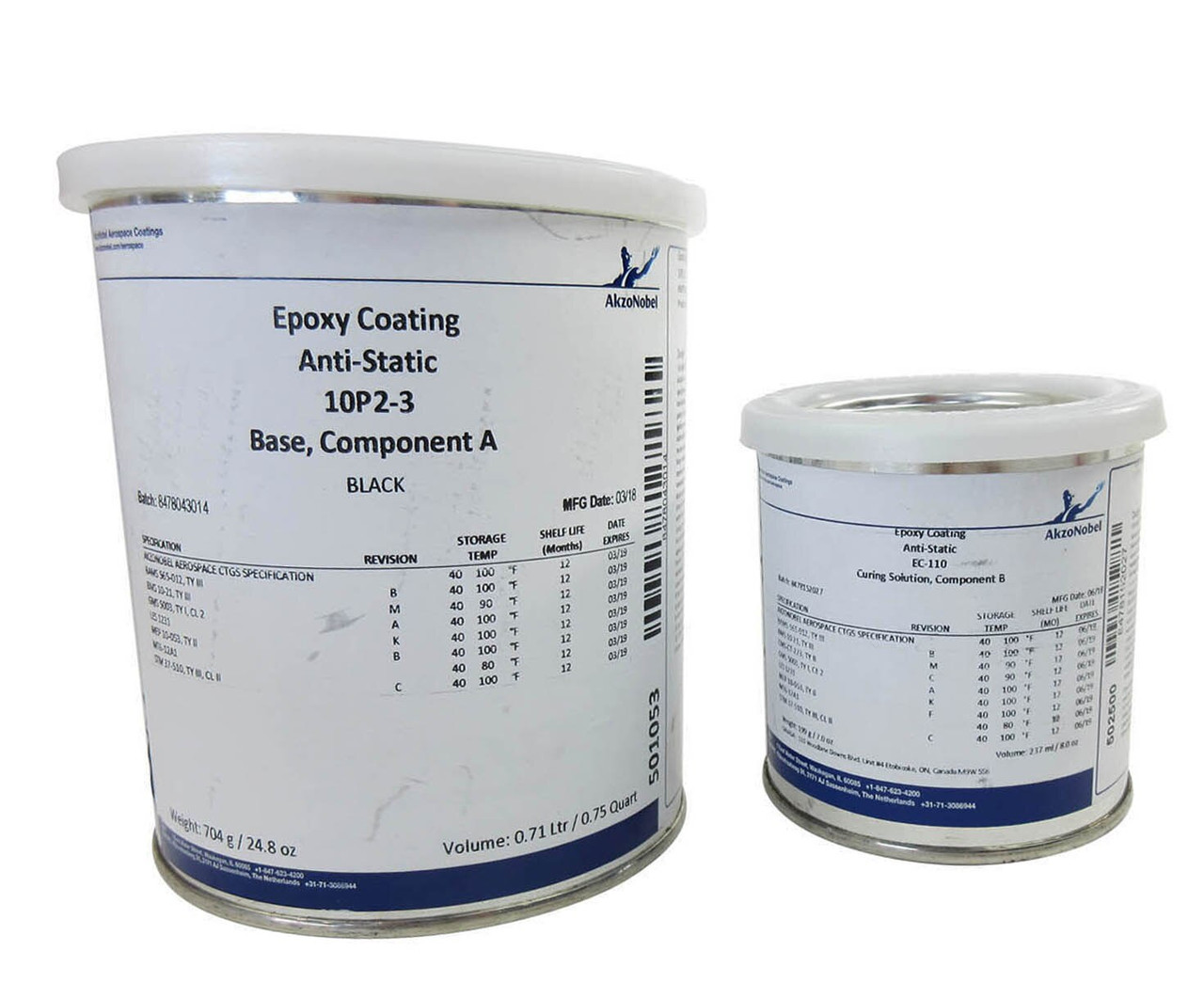
AkzoNobel 10P2-3/EC-110 Flat Black CTG5 Anti-Static Conductive Epoxy Coating – Quart Kit
AkzoNobel 10P2-3/EC-110 is a flat black, anti-static conductive epoxy coating qualified to the CTG5 (Conductive Topcoat Grade 5) specification — used on aerospace surfaces where controlled electrical conductivity is required to safely dissipate electrostatic charge buildup. Anti-static coatings are critical on aircraft fuel system surfaces, electronic equipment housings, and other areas where uncontrolled static discharge could cause fuel ignition, electronic interference, or personnel safety hazards.
AkzoNobel’s EC-110 conductive epoxy formulation provides the flat black appearance and specified electrical surface resistivity within the CTG5 specification range, combined with the adhesion and chemical resistance of an aerospace-qualified epoxy binder. The quart kit is the right format for component-level maintenance coating, small-area repair, and MRO operations where the larger production kit would result in material waste.
The flat black color provides low-reflectivity identification of anti-static treated zones and is compatible with the visual appearance requirements of aircraft fuel systems and electronic equipment bays where coated surfaces must remain visually distinguishable from uncoated areas during inspection.
| Attribute | Detail |
|---|---|
| MPN | 504964 |
| Brand | AkzoNobel |
| Product | 10P2-3/EC-110 |
| Color | Flat Black |
| Type | Anti-Static Conductive Epoxy Coating |
| Size | Quart Kit |
| Specification | CTG5 (Conductive Topcoat Grade 5) |
| Surfaces | Fuel System Components, Electronic Housings, Aerospace Panels |
| Function | Electrostatic Charge Dissipation |
| Industry | Aerospace, Defense, MRO |
Technical Information
AkzoNobel 10P2-3/EC-110 uses a conductive filler system — carbon black or graphite particles — dispersed through the epoxy binder matrix at a loading that produces surface resistivity within the CTG5 specification range. The CTG5 specification defines both the minimum conductivity (to ensure effective charge dissipation) and maximum conductivity (to prevent electrical short-circuit hazards) of the coating, requiring a controlled resistivity window in the cured film.
The epoxy binder of EC-110 provides strong adhesion to aluminum, composite, and painted substrates, combined with resistance to jet fuels, hydraulic fluids, and cleaning solvents encountered in aircraft maintenance operations. The flat black appearance is maintained through the UV stability of the epoxy binder and the stable black pigmentation of the conductive carbon filler system.
After cure, verify the surface resistivity of the applied coating with a resistance meter to confirm CTG5 specification compliance before returning the coated component to service. Resistivity values outside the specification range indicate potential application or material problems that must be investigated and corrected.
Why Choose AkzoNobel 10P2-3/EC-110?
- ✅ CTG5 Qualified — Specification-approved anti-static epoxy coating
- ✅ Flat Black Appearance — Low-reflectivity for fuel system and equipment areas
- ✅ Controlled Conductivity — Specified resistivity range for safe static dissipation
- ✅ Quart Maintenance Kit — Right size for component and spot repairs
- ✅ AkzoNobel Aerospace Quality — Global aerospace coating expertise
Applications
10P2-3/EC-110 is used on aircraft fuel system components, electronic equipment housings, avionics bay surfaces, and other aerospace areas requiring CTG5 qualified anti-static conductive epoxy coating.
Frequently Asked Questions
Q: What is AkzoNobel 10P2-3/EC-110?
A: 10P2-3/EC-110 is a flat black CTG5 spec anti-static conductive epoxy coating for aerospace surfaces requiring controlled electrical conductivity to prevent dangerous static charge buildup.
Q: MPN for AkzoNobel 10P2-3 quart?
A: MPN is 504964.
Q: What is CTG5 specification?
A: CTG5 (Conductive Topcoat Grade 5) is an AkzoNobel aerospace specification defining the electrical resistivity range, adhesion, and chemical resistance requirements for anti-static conductive coatings on aerospace surfaces.
Q: How is anti-static coating performance verified?
A: Surface resistivity is measured with a resistance meter after cure. The reading must fall within the CTG5 specification window to confirm compliance before returning the component to service.
Q: What is the difference between anti-static and fully conductive coatings?
A: Anti-static coatings (like CTG5) have a controlled resistivity that dissipates charge safely but is not as conductive as fully conductive coatings. The resistivity range is engineered to prevent both static accumulation and electrical short-circuit hazards.

Reviews
There are no reviews yet.